With a targeted collection of museum materials from the Dubrovnik Museums and the Toledo Museum in Spain, we began our research. Personally, I undertook a detailed study of all materials, which amounted to over 2GB. It was an extraordinary pleasure to begin writing this work. The materials thoroughly cover medieval Dubrovnik shipbuilding, extending into the 17th century. Naturally, the study begins at the beginning.
Zoran Pavlović, MarisStella Ltd – January 2, 2024
Navicula: The Beginning of Study
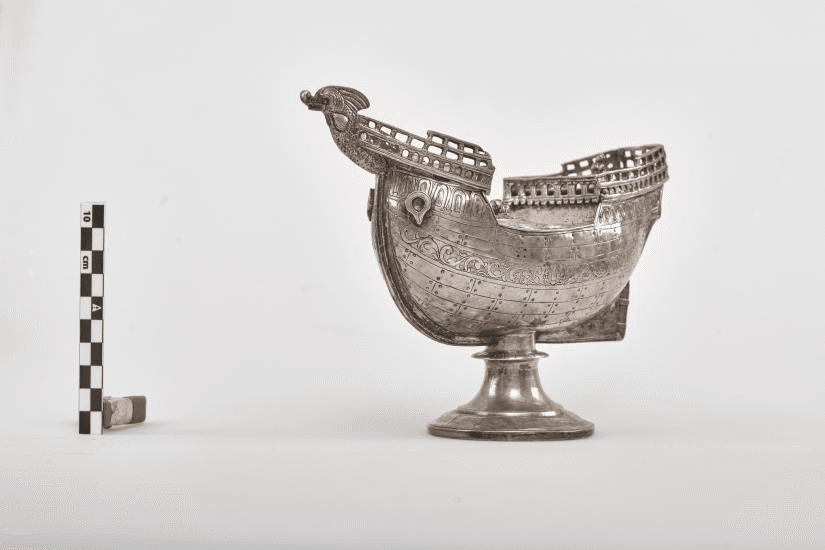
The subject of this study is the navicula, a precious artifact and an inseparable exhibit at the famous Dominican Monastery of St. Dominic in Dubrovnik.
Dominican Monastery of Dubrovnik
Founded in 1225, the monastery is located near the old city port on the eastern side of Dubrovnik. It is the oldest existing monastery in the city.
When the first Dominican friars temporarily stopped in Dubrovnik on their way to Palestine, the city leaders, impressed by their inspired preaching, invited them to stay. They were given the Church of St. Jacob, which still exists near the monastery.
As the number of friars grew, the noble Palmotić family donated a church with a garden in 1228 in the eastern suburb of Ploče. There, the Dominicans built a new church during the 14th century, along with the monastery building and cloister in the early 15th century, and the upper floors and refectory in the 16th century. With an imposing 40-meter bell tower, the monastery perfectly integrated into the city walls, serving as part of the city’s defense.
The cloister is a unique example of floral Gothic and Renaissance motifs intertwined with ivy, featuring 24 sculpted saints on its vaults. Constructed by multiple masters over several periods, the design was created by Tommaso di Bartolomeo, who was a sculptor and armorer rather than an architect. At the center stands a 16th-century cistern, capable of supplying water for three years to the monastery and a large portion of the city.
Library and Museum Collections
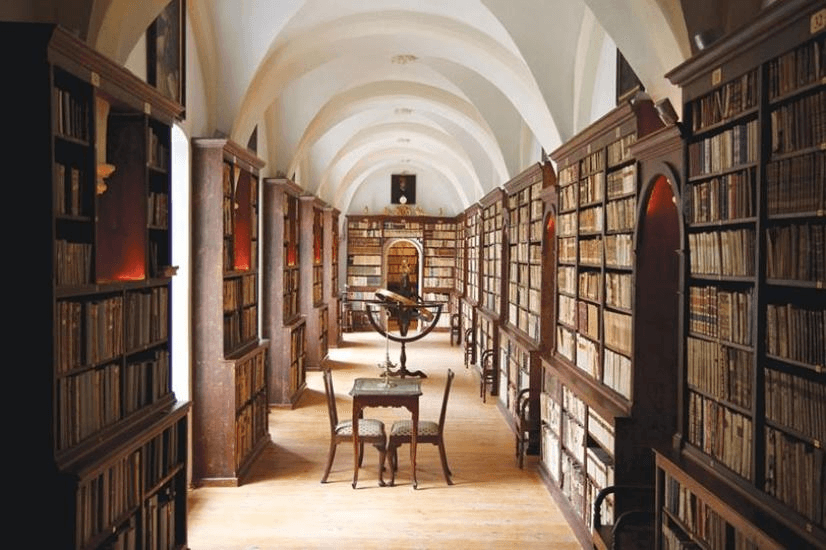
Construction of the monastery library began in 1492. According to the decision of the Dubrovnik Republic Senate, it was “for the glory of God, the ornament of the monastery, and the comfort of our citizens as well as visitors to our city.” It became the first public library of its kind in this part of Europe, housing 239 incunabula, many rare older editions, and around 100 richly illuminated medieval manuscripts.
The museum opened to visitors in 1970, containing many valuable artworks and objects of painting, goldsmithing, and book arts. Highlights include works by local masters of the Dubrovnik painting school from the 15th and 16th centuries, such as Nikola Božidarević, Mihajlo Hamzić, and Lovre Dobričević, along with a work by the Florentine painter Lorenzo di Credi and a diptych by Hans Memling. A special piece in the former monastery chapter is a 1550 oil painting by Titian (Tiziano Vecellio): St. Blaise with Mary Magdalene.
Church of St. Dominic
The Church of St. Dominic is one of the largest Gothic spaces on the eastern Adriatic coast. Construction began in 1301, with completion and consecration in 1314. At the time, it was the largest single-nave church on the eastern Adriatic coast, featuring a pentagonal apse and three high Gothic arches.
Notable features include:
- The altarpiece Miracle of St. Dominic by Vlaho Bukovac (early 20th century)
- One of Europe’s largest painted crucifixes: a 5-meter-high cross by Paolo Veneziano (1350), commissioned as a vow against the Black Plague of 1348
The bell tower (1390–1450) combines elements from Romanesque to Baroque, exemplifying harmonious integration of diverse styles.
MarisStella 3D Navicula Project
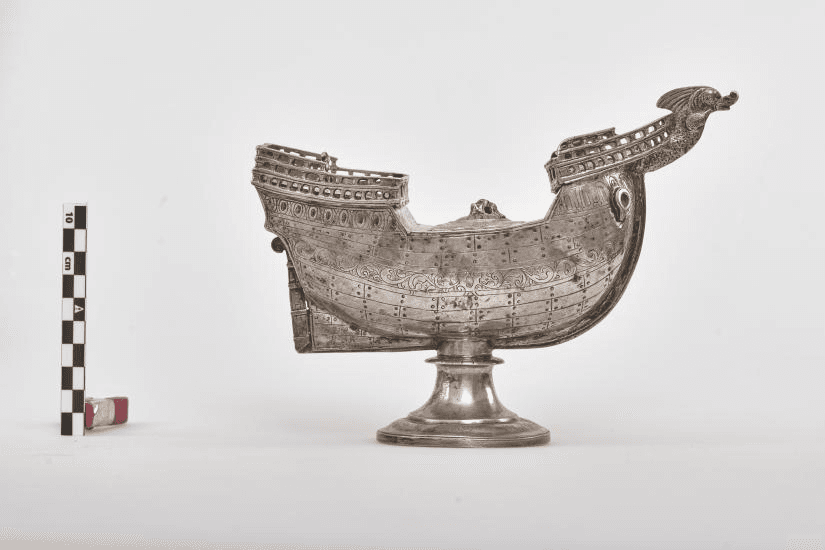
As a member of MarisStella Ltd, on January 9, 2024, I initiated the creation of a precise 3D model of the navicula, ultimately executed by Ljubo Gamulin at the request of MarisStella. This 15th-century ship model, long overlooked, is a faithful reconstruction that enables advanced study and calculation of the original ship’s design.
After coordination with the monastery custodians, detailed photogrammetry was performed, resulting in an exceptionally accurate 3D digital model. The study of this artifact is based on this 3D model, with all horizontal and vertical components carefully analyzed.
Citation: Photogrammetry. Croatian Encyclopedia, online edition. Miroslav Krleža Lexicographical Institute, 2013–2024. Accessed June 7, 2024.
Photogrammetry Overview
Photogrammetry (photo- + -gram + -metry) is the science and technique of determining the shape, size, or position of an object using photographs. It relies on geometric and optical laws to reconstruct objects partially or fully from images.
- 2D reconstruction: Single image, approximately flat objects (e.g., land or building facades)
- 3D reconstruction: Requires stereopairs, images from different angles, called stereophotogrammetry
Applications: aerial (planes, satellites, space probes) and terrestrial (ground-based) imaging. Modern techniques increasingly use digital cameras and computer processing for highly automated 3D models.
Uses include geodesy, engineering, urban planning, archaeology, medicine, industrial monitoring, and planetary surface studies. Croatia has a long tradition in photogrammetry, with the first Croatian book published in 1897 and a dedicated institute established in 1961.
Incense Holder in the Shape of a Dubrovnik Carrack
Historical records suggest that this exquisite relic represents a 15th-century Dubrovnik carrack, with a capacity of around 1000 Dubrovnik tons. Some details, such as the main deck railing, were incomplete, and certain features were oversized in this precise goldsmith work. However, careful study revealed that much of the previously assumed information was inaccurate.
Photographs are protected by copyright: all rights reserved by MarisStella 2024.