
Beschreibung
MS Model ship kits, an innovation in making scale model sails from the Age of Sail period
Introduction
During the Age of Sail, vessels including sloops, frigates, and first-rate ships featured sails that were not symmetrically reinforced on both sides. Areas subjected to greater stress—where the canvas would experience accelerated wear—were strengthened with additional layers of fabric, creating doubled or tripled sections known as Linings and Tabling.
The distribution of these reinforced areas was not uniform across the sail. Depending on the sail’s position and function aboard the ship, the pattern of Linings and Tabling varied significantly, resulting in visually distinct sides.
For instance, topsails commonly featured reinforced upper sections to protect the canvas from abrasion when chafing against the mast tops during reefing operations. Similarly, the lower corners of sails were also doubled or thickened to provide security for the Clews and the lower ring bolts, ensuring durability in these high-stress areas.
HMS ONTARIO and HMS SPEEDY Sails
The sails for the HMS Ontario ship model are pre-sewn on the fabric, embroidered to look realistic. In our set of sails we supply a complete sail without the bolt-rope. The bolt-rope is supplied in the regular HMS Ontario model ship kit box. There are 9 sails in this HMS Ontario sail set, ant this set is an additional article, it is to be purchased separately.
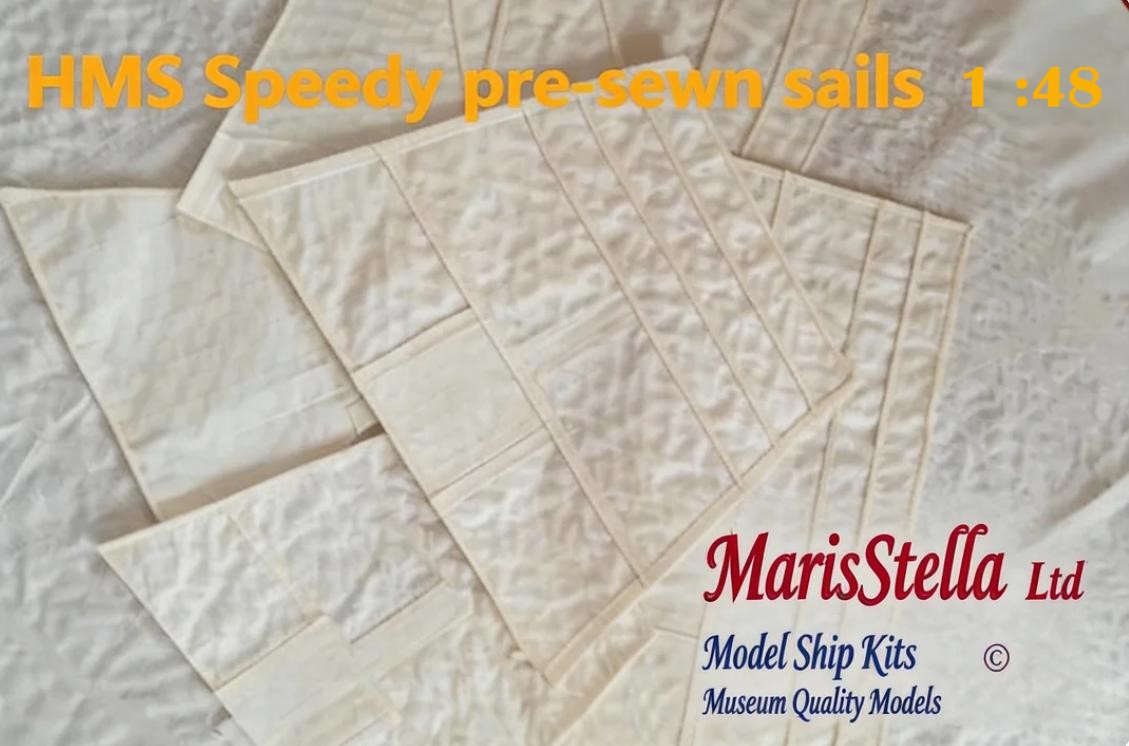
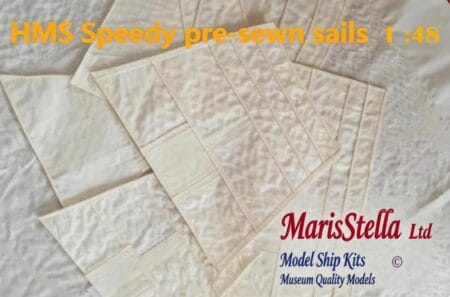
There are 27 sails in this sail set for the HMS Speedy ship model. They are pre-sewn on the fabric, embroidered to look realistic. In our set of sails we supply a complete sail without the bolt-rope. This 27 sail set is an additional article, it is to be purchased separately.
Abstract
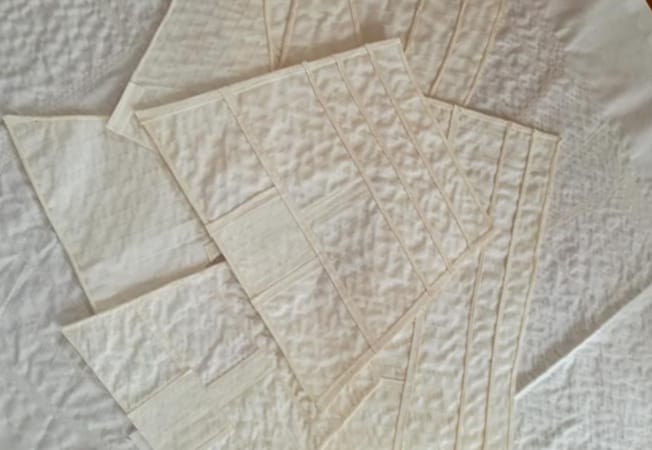
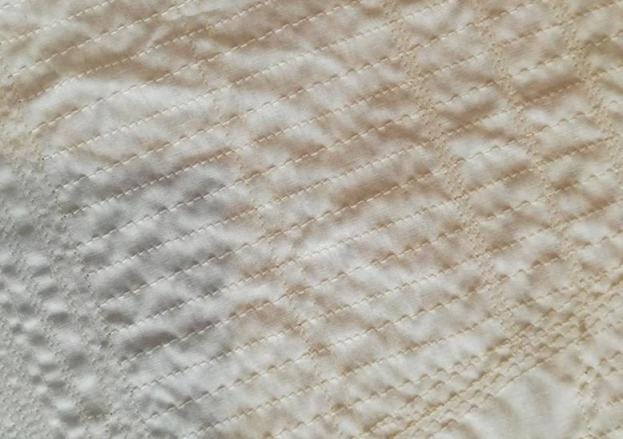
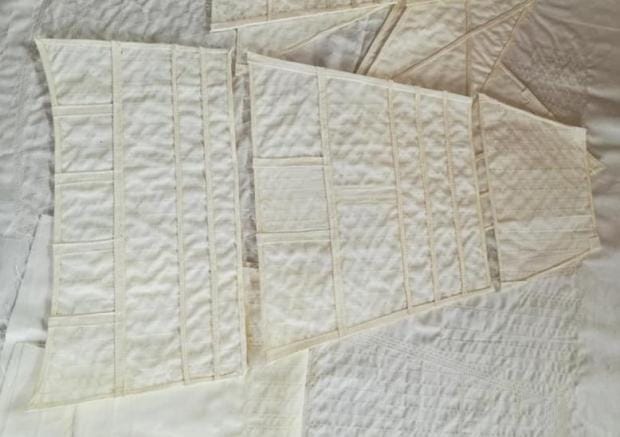
On the fabric, there are pre-sewn sails with all their associated rigging lines. Positioned nearby, adjacent to the sails, are the corresponding Lining and Tabling pieces.
The modeler should first carefully cut the sails away from the fabric material. To achieve clean, finished edges and prevent fraying, the recommended method is to apply a extremely thin coat of watered-down white wood glue along the sail perimeters.
Allow the glue to dry completely. Once hardened, use sharp scissors to cut out the sails, following their outer contours precisely. Repeat this same process for the accompanying Lining and Tabling pieces.
Next, attach the Linings and Tabling to their designated positions on each sail using adhesive. To complete the sail assembly, stitch the various components together as specified in the instructions.
Comprehensive instructions
You can leave the sails as they are without adding Linings or you can add the Linings. Add the boltrope for a more authentic look.
Definition of the Linings and Tabling: the canvas sewed on the leeches and middle of a sail to strengthen it. Types of the Linings: Leech lining, middle-band, reef band, buntline-cloths, mast cloths, top lining.
Position of the Linings on the sails: Top-linings and mast-cloths are put on the aft side and all other linings on fore-side of sail.
Cutting the Sails, Linings and Tabling:
Cut the sails including the hem edges. Cut the Linings and Tabling taking care of the seams on them. The seams will give an impression like the Linings and Tabling were sewn to the Sail.
Process of cutting and folding the sail edges (The Selvedge):
If you use a special glue (In America, white glue seems to work best and stays reasonably flexible.) Apply the glue along the edges, cut the sails and fold the edges over. Some modelers iron the folded edge to be sure it stays folded over. If you happen to cut a ragged edge, use a pair of very sharp scissors to trim the cut edge. When dry, trim any rough spots with a pair of sharp scissors.
If you use a wood glue, such as Pattex by Henkel, dilute it with water and apply it with a brush over the edges and, when dry, trim with sharp scissors.
Hem the Sails once or twice:
If you do not use the Linings, we suggest that you hem the sails by folding the hem twice to hide the cut edge, gluing and ironing it to ‘fix’ the folds in place. If you use the Linings on the sail leeches, you only need to hem them once.
Process of gluing the Linings and Tabling:
If you use a special glue for fabric apply the glue to the both surfaces to glue and glue them together.
If you use wood glue, as Pattex by Henkel, dilute it with water, apply it with a brush over the both surfaces to glue . When dry, press the surfaces one to the other with a very hot iron. The glue will melt and unite into one whole when cold.
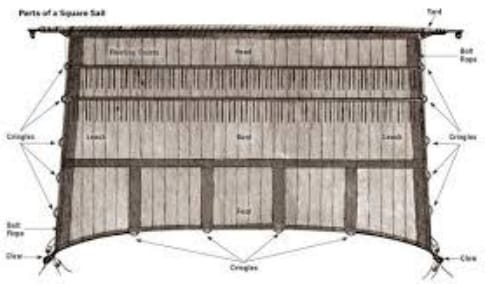
To sew the Bolt-rope and Cringles to the sails, use a needle with a large eye. Sew the sail Clew using a needle and thin thread. Sew the reef points by sewing them through the sail and tying an overhand knot on both sides of the sail fabric.
Date: February 20, 2026
Name: Zuan
Title: Project Manager
Focus Areas: Research and Design


Rezensionen
Es gibt noch keine Rezensionen.